Saturday, February 14, 2015

Feb 14th – Peanuts & Valentine’s Day

Happy Valentine's Day everyone!

Today’s comic is the Peanuts featuring the topic of Valentine’s Day


Comic Breakdown

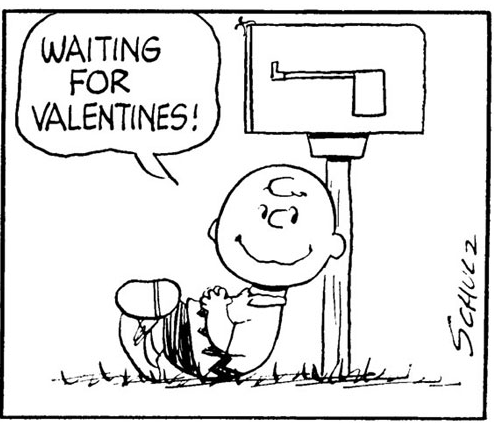
“Waiting for Valentines!” – Charlie Brown’s excited thoughts

What is going on?

On Valentine’s Day, February 14th, people receive gifts and cards of well wishes from friends, family, and their romantic partner.


For children, the more cards and gifts you receive the more popular people think you are.


Charlie Brown was happy that he received a Valentine’s Day card in the mail but he became sad because Snoopy received many more!

The origins of Valentine’s Day

Valentine’s Day is an annual holiday that takes on February 14th.  It is celebrated in many countries around the world.  Though a holiday, it is considered by many to be a voluntary celebration rather than a true holiday because people do not get the day off from work or school. 


Its origins are ancient and versions of the holiday existed in Ancient Rome and can be traced back to early Christianity.  Valentine’s Day became associated with romantic love in the Middle Ages.  People began giving out greeting cards (Valentine’s Day cards) in the 1800s. 


Today is a billion dollar industry due to all the cards, candy, food, jewellery, and gifts that are purchased for the occasion


Today’s images are from here, here, herehere, here, and here.

Friday, February 13, 2015

Feb 13th – Friday the 13th

Hello everyone!

Today is February, Friday the 13th!


Comic Breakdown

“I don’t care if it’s Friday the 13th.  I’m just happy it’s finally Friday!

What is going on?

The person in this image is very happy that it is Friday, the end of the work week.  He does not care that it is supposed to be an unlucky day.

The Number 13

In Western Culture, the number thirteen is an unlucky number.  Some people are afraid of the number and do anything to avoid it.  Some buildings do not have a 13th floor as a result.


Why should you care if it is Friday the 13th?

Friday the 13th is also known as Black Friday. 

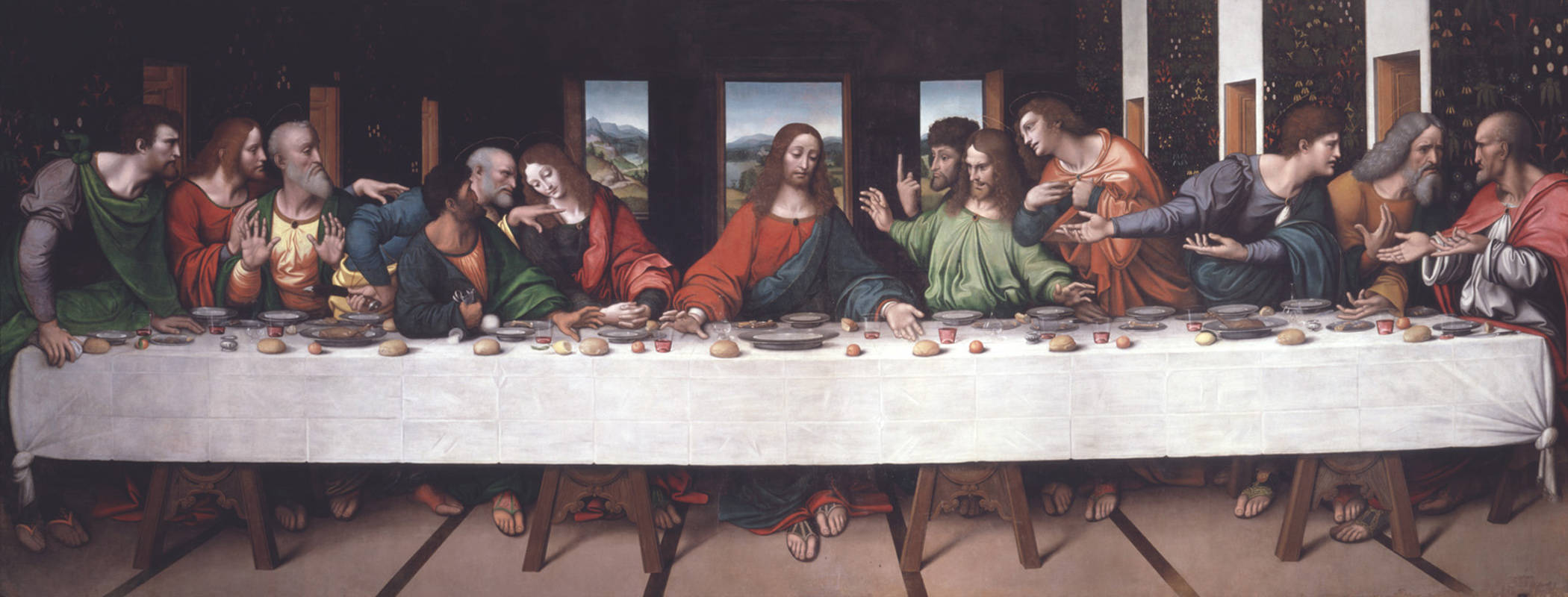
People think the number thirteen is bad and think the date of Friday the 13th is unlucky because both the day of the week and number date are associated with the crucifixion (death) of Jesus Christ.  He was crucified (nailed to a cross and left to die) on a Friday and there were thirteen people at his last supper.


Because of the feeling of fear connected to Friday the 13th, many people will avoid going to work or even doing risky things, such as traveling on an airplane, on that date.


Though the number thirteen has been considered unlucky by many since the Middle Ages, there is no evidence of any fear towards the date of Friday the 13th before the 1900s.


Today’s images are from here, here, here, here, and here.

Tuesday, February 10, 2015

Feb 10th – Mimi & Eunice: Free & Priceless

Hello everyone!

Valentine’s Day is in a few days.  The idea of love is all around at the moment.

Today’s comic is Mimi & Eunice featuring the word free


Comic Breakdown

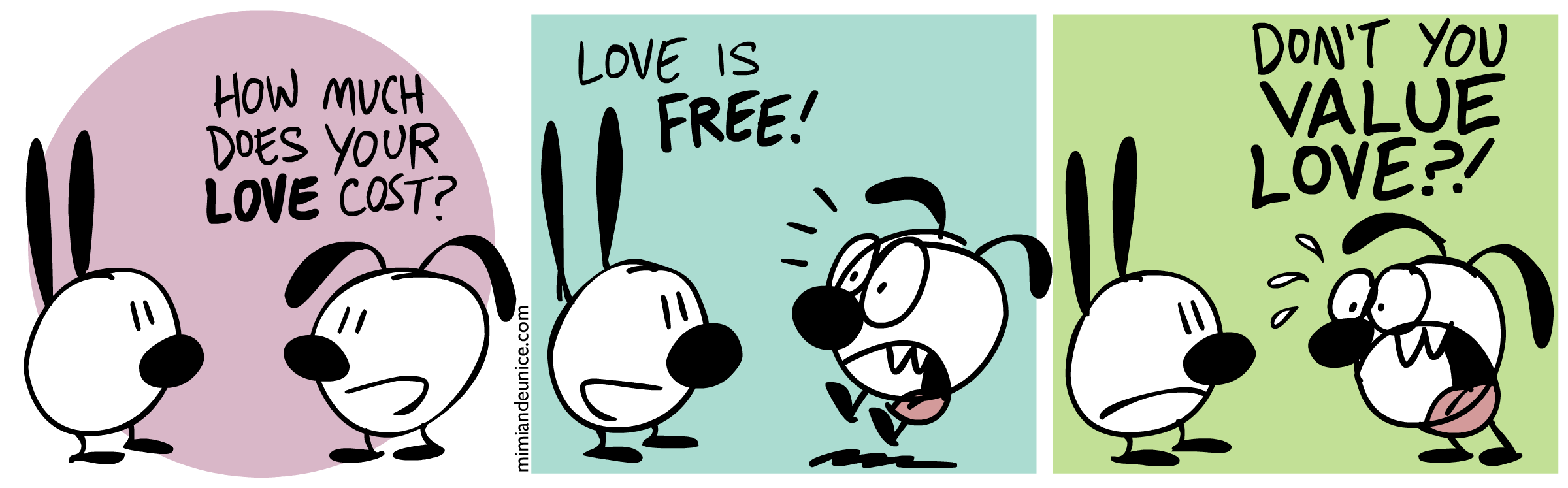
“How much does your love cost?” – Eunice asks Mimi

“Love is free! – Mimi replies to Eunice

“Don’t you value love?” – Eunice’s response to Mimi

What is going on?

Eunice wants to know what it takes to be loved by Mimi.  Mimi says her love is free which means one does not have to do anything special to get her love.  The ones that are important to her will just be loved.  Love is not about giving and taking.  This worries Eunice because she thinks from Mimi’s answer that Mimi does not think love is important.


The meaning of free

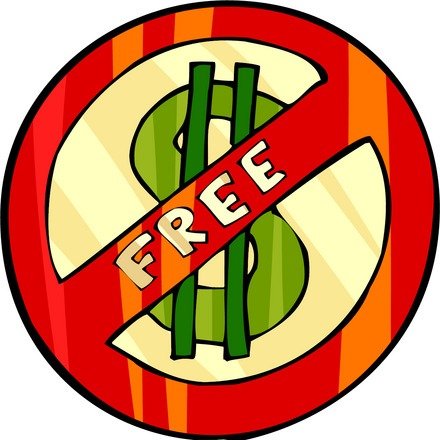
Free means one does not have to pay any money or give anything for something.  The something can be an object or a service.  For example, the library gives the public access to books for free. 


Love is free?

The idea that love is free means that you cannot put any value on love because it is priceless.  This means it is very important and precious.  There is no money in the world that can buy it or create it.  Love is an emotion that just happens and true love (familial, romantic, or friendship) cannot be purchased the way goods or services are. 


In conclusion, for Mimi to say that love is free means that she values it very much. Eunice took the meaning of love being free too literally.  When something is free it means you do not have to pay anything for it.  Mimi meant that love is free in that it is priceless.

Today’s images are from here, here, here, here, and here.

Sunday, February 8, 2015

Feb 8th – Family Circus: Draw

Hello everyone!

Today’s comic is Family Circus featuring the word draw.


Comic Breakdown

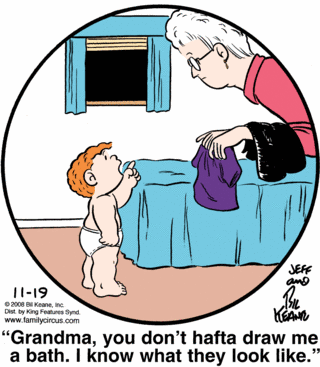
“Grandma, you don’t hafta draw me a bath.  I know what they look like.” – Jeffy to his grandmother

Note: Hafta is the informal short form of “have to” that many say when they speak.

What is going on?

Grandma is getting a bath ready for Jeffy. 


The meaning of draw

The word draw is a verb and has more than one meaning.

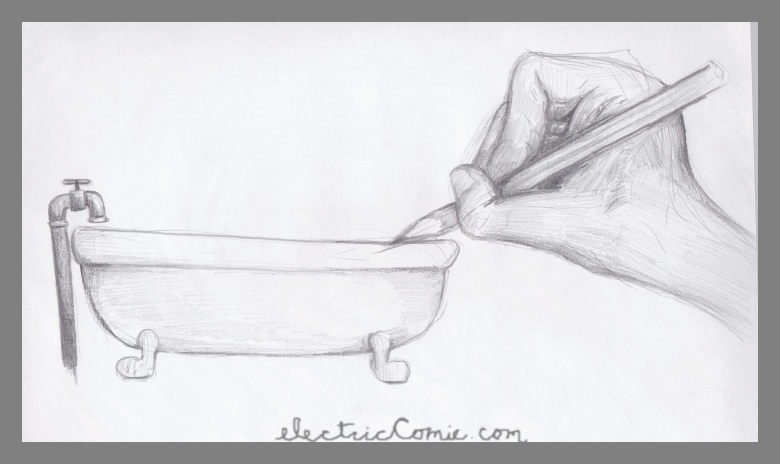
The most common meaning of draw means to create an image or picture using a device that has ink such as a pencil, crayon, marker, etc.


Another meaning for the word draw means to bring or take something.

For example:  Drawing (getting/taking) water from a well.


Drawing a bath

The phrase “draw a bath” means to “prepare a bath”.   In this context, the meaning of draw is to take or bring.  The phrase “draw a bath” is from a long time ago when people did not have running water and would have to draw water from the well and bring it into the house to prepare a bath. 


In conclusion, this comic is funny because Jeffy has misunderstood what his grandmother meant when she said she would “draw” him a bath.  She meant she would get the bath ready for him but he thought she was going to draw him a picture of a bath.


Today’s images are from here, here, here, here, here, and here

Thursday, February 5, 2015

Feb 5th – Hi & Lois: This Little Piggy

Hello everyone!

Today’s comic is Hi & Lois featuring a popular English nursery rhyme. 


Comic Breakdown

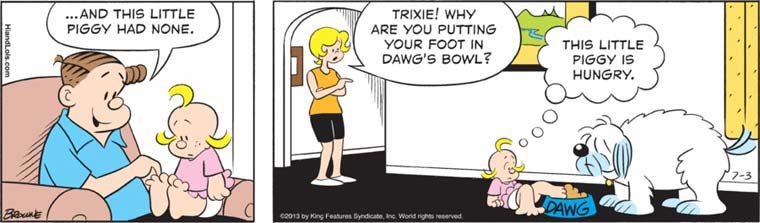
“…and this little piggy had none.” – Hi telling a nursery rhyme to Trixie

Later in the day.

“Trixie!  Why are you putting your foot in Dawg’s bowl?” – Lois confused by her daughter’s actions

“This little piggy is hungry.” – Trixie’s thoughts and explanation for her odd actions

What is a nursery rhyme?

A nursery rhyme is a song or poem meant for young children.  These poems and songs have been around for centuries.  Popular English language nursery rhymes mostly date from the 1700s and 1800s.


Many nursery rhymes are also used to teach a moral or academic lesson.  They are similar to fairy tales but shorter and meant for a younger audience. 

What is going on?

Hi is telling a nursery rhyme to his baby daughter Trixie.  The nursery rhyme is “This Little Piggy”.  The nursery rhyme tells of a short story of a group of little pigs and different things that they do.  Every finger or toe represents a pig.  The rhyme is often used to teach young children how to count. 


Trixie has taken the rhyme too literally and thinks that her toes are little pigs therefore she needs to feed them!


This Little Piggy

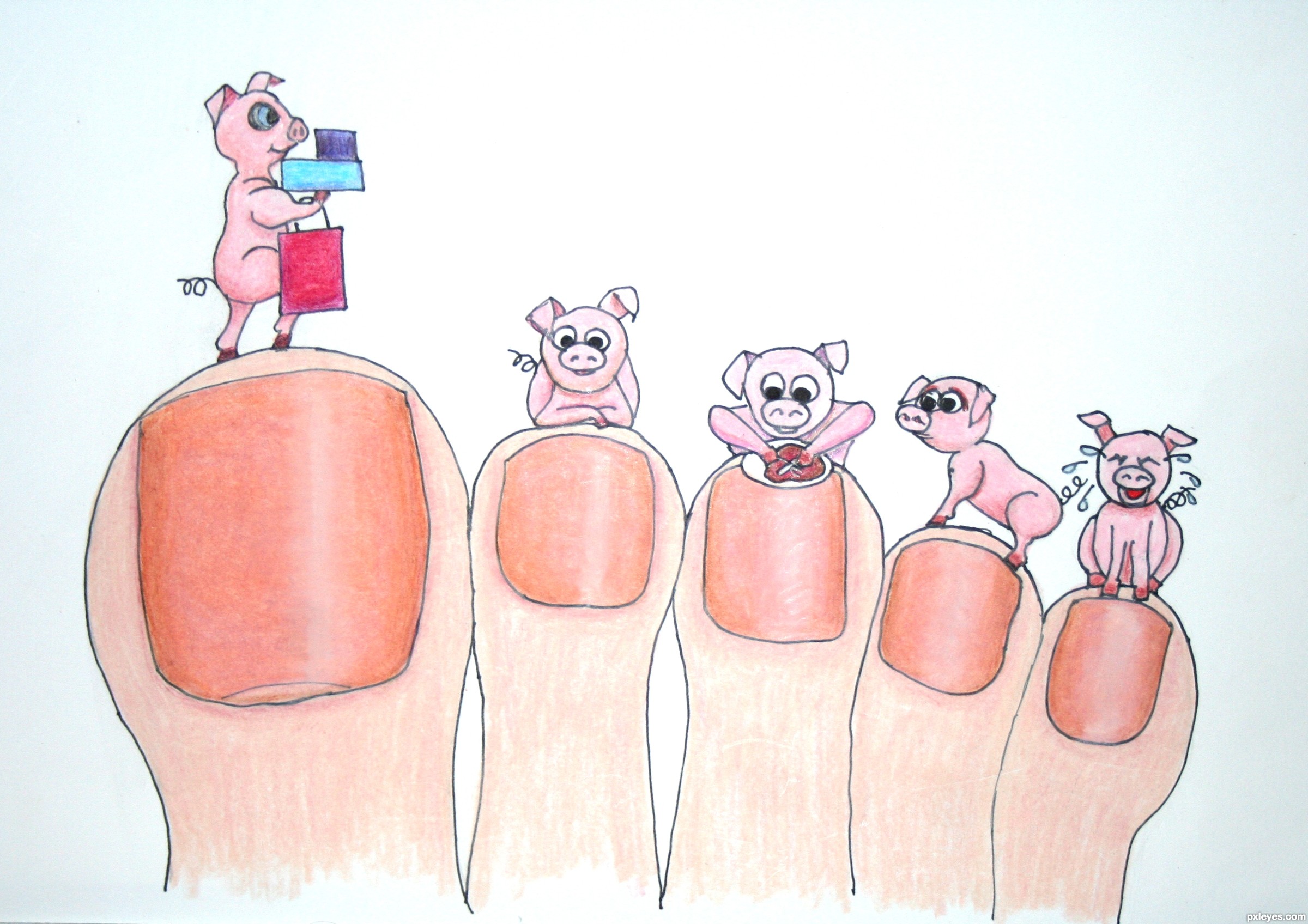
“This Little Piggy”, also known by the name “This Little Pig”, is a fingerplay nursery rhyme for very young children.  It exercises finger and toe coordination for young children.  It also teaches them to count and track small numbers.  The rhyme originated in the early 1700s.


Every toe or finger represents a pig in the story.  The rhyme is mostly played using toes.

There are several versions of “This Little Piggy”.  The most common one used today is:

This little piggy went to market,
This little piggy stayed home,
This little piggy had jam and bread,
This little piggy had none,
And this little piggy went crying all the way to town.


Today’s images are from here, here, here, here, here, and here.

Monday, February 2, 2015

Feb 2nd – Family Circus: Cotton Candy

Hello everyone!

Today’s comic is Family Circus. This comic shows how not all foods names are literal.


Comic Breakdown

“They might be made from the same thing, but cotton candy tastes better than my shirt.”

 – Billy’s thoughts on cotton candy

What is cotton candy?

Cotton candy, also known as candy floss or fairy floss, is a candy in the form of spun sugar.   It is often sold at carnivals, fairs, and amusement/theme parks. 


Cotton candy got its name because it looks like the cotton plant.


Why is Billy comparing a piece of clothing and candy?

Billy is taking the meaning of cotton candy to be literal. He thinks the candy is called cotton candy because it is made out of cotton.  Cotton candy is called cotton candy because it looks and feels like cotton.


A lot of clothing is made from cotton fabric.


In conclusion, this comic is funny because a child is thinks that both cotton candy and clothing are made from cotton.

For more posts on literal sounding food names, click  here and here.

Today’s images are from here, here, here, here, and here.

Saturday, January 31, 2015

Jan 31st – Family Circus: Round & Around

Hello everyone!

Today’s comic is Family Circus featuring a misunderstanding of the word round. 


Comic Breakdown

“Do you know the world is round? – Billy to his little brother Jeffy

“Round what?” – Jeffy is confused

What is going on?

Billy is telling his little brother Jeffy that the Earth is round.  It is a sphere which is a three dimensional shape.


Jeffy does not understand.  He thinks Billy is telling him that the world (the Earth) is around something.

They are both using the word “round” in different ways.  Billy is being literal when he uses the word round.  Jeffy understands the word “round” as being the short form of the word “around”.  This is causing confusion.

Round & Around – The Adjective versus The Adverb


The meanings of round

The word round is often used as an adjective.  Adjectives are used to describe nouns (a person, place, or thing).

As an adjective, the word round can mean the following:

Used to describe something that is circular.

Ex) It can be flat like a circle.


Ex) It can be three dimensional like a sphere.


It can also describe something that is round in shape.  


The object does not have to have an entirely flat area or no sharp edges to be considered round.


The meaning of around

The word “around” is an adverb.  Adverbs describe actions (verbs).

The word around means to encircle something or to go from place to place.

Ex) Andy is walking around the neighbourhood. (He is walking in the areas near where he lives.)

Ex) John has been around the world.  (It means he has traveled to many places in the world.)


In conclusion, Billy is telling is brother the Earth is round like a sphere in shape.  Jeffy misunderstands and thinks Billy means round for “around” and wonders what the Earth is physically going (encircling) around?

Today’s images are from here, here, here, here, here, here, here, and here.